

Hello, I’m Allen. As a manufacturer deeply embedded in the chemical industry here in China, I spend my days ensuring that the white powders and blue crystals leaving our factory are nothing short of perfect. At Kands Chemical, we specialize in inorganic compounds, and one of our most requested products is copper sulphate.
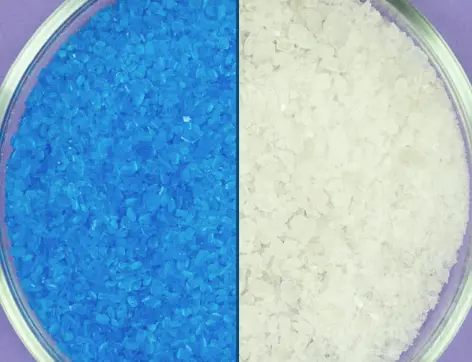
If you are a procurement officer like Mark, you likely see purchase orders for kwiv silfat pentahydrate ou copper sulphate land on your desk frequently. But have you ever stopped to wonder about the specific difference between copper sulfate (anhydrous) and the pentahydrate form? Why is one a brilliant blue while the other is a pale white powder?
This article is worth reading because it strips away the complex jargon. I will explain exactly what sulfate and copper sulfate pentahydrate are, how they function in agriculture ak endistri, and why the water molecules trapped inside the crystal matter so much. We will explore the uses of copper sulfate pentahydrate, safety protocols, and market insights to help you make better purchasing decisions.
What is Copper Sulfate Pentahydrate?
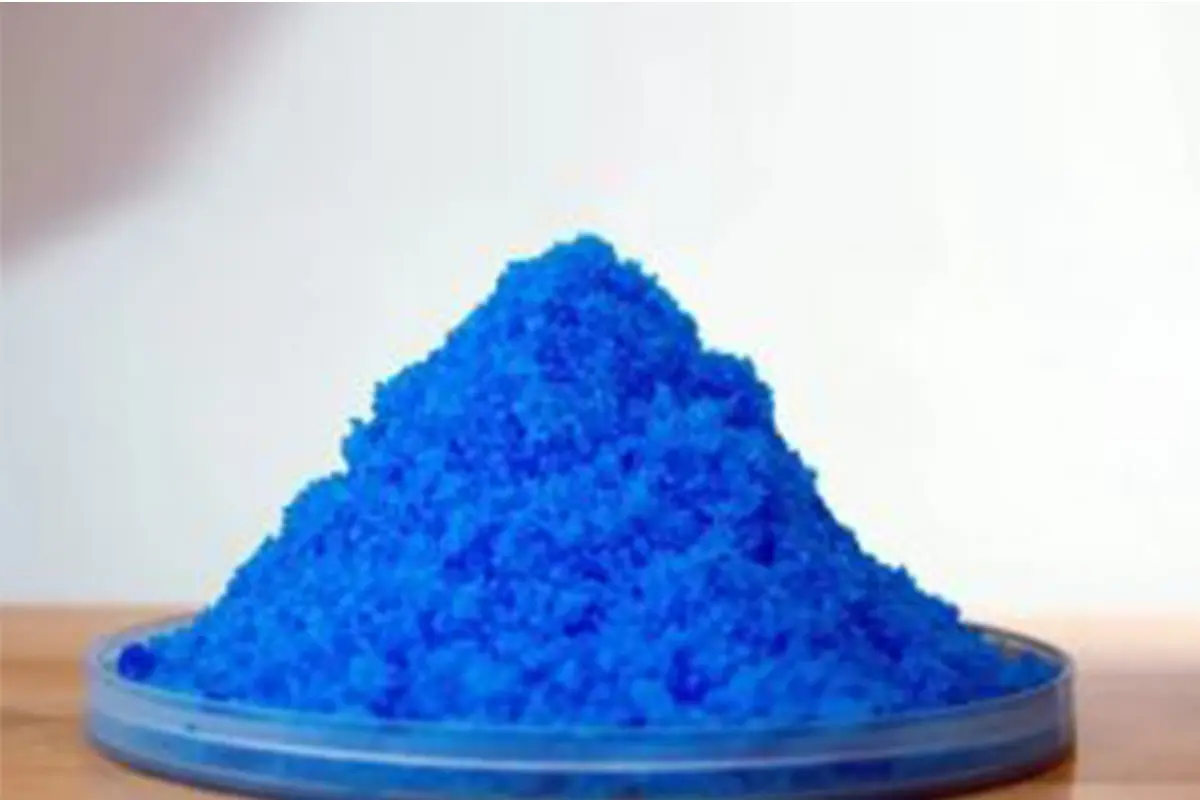
Copper sulfate pentahydrate is arguably the most recognized chimik konpoze in the world of inorganic salts. If you have ever seen a bright, electric blue crystal in a science lab, you were likely looking at this substance. It is a salt formed by treating cupric oxide with sulfuric acid. The "pentahydrate" part of its name is the key. It means that for every single molekil of copper sulfate, there are five molecules of water attached to it.
The chemical formula is CuSO₄·5H2O. This structure gives the crystal its characteristic blue color. In its natural mineral form, it is known as chalcanthite. For us in the prodiksyon line, this form of copper sulfate is the most stable and easy to handle. It doesn’t absorb moisture from the air as aggressively as other forms, making it ideal for storage and shipping.
When we talk about copper sulphate in a general sense, we are usually referring to this pentahydrate form. It is the industry standard for everything from farming to metal finishing. Its ability to dissolve easily in dlo makes it a versatile solisyon for many problems.
The Chemical Difference: Anhydrous vs. Pentahydrate
One of the most common questions I get is about the difference between copper sulfate (anhydrous) and kwiv silfat pentahydrate. To the naked eye, the difference is night and day.
Copper sulfate pentahydrate se la blue crystalline solid we just discussed. It contains dlo. On the other hand, anhydrous copper sulphate se yon white or pale grey poud. "Anhydrous" literally means "without water." If you take the blue crystals and heat them, the water evaporates, leaving behind the white anhydrous powder.
Chemically, the anhydrous form (CuSO₄) is like a dry sponge. It is desperate to absòbe water. If you leave anhydrous copper sulphate out in humid air, it will slowly turn blue as it sucks moisture from the atmosphere to revert to its pentahydrate state. This property makes the anhydrous form useful as a desiccant (drying agent) or as a test for moisture, but for most commercial applications, the pentahydrate form is preferred because it is cheaper and more stable.
Why is the Water Content So Important?
You might think, "Allen, why are we paying for dlo inside a chemical?" That is a valid question. The five molecules of water are not just filler; they define the crystal structure and the chemical posesyon of the substance.
The hydration state affects how the chimik reacts. For example, when using copper sulfate nan yon solisyon, the pentahydrate dissolves readily. The water molecules help break apart the ionic lattice. In contrast, the anhydrous form releases a significant amount of heat when added to water (it is exothermic) as it re-hydrates.
Nan chimi, this distinction is vital. If a formulation calls for a specific amount of copper, you must account for the weight of the water in the pentahydrate. Copper sulfate pentahydrate is about 25% copper by weight, whereas anhydrous copper sulphate is about 40% copper. If you swap one for the other without adjusting the math, your konsantrasyon will be wrong, which could be disastrous in agriculture ou remèd.
How is Copper Sulphate Used in Agriculture?
The agricultural sector is the biggest consumer of our copper sulphate. Farmers have relied on this konpoze for over a century. Its primary isaj se tankou yon fungicide and pesticide.
Have you heard of the Bordeaux mixture? It is a famous blend of copper sulphate, lime, and dlo. It was invented in France to save grape vines from downy mildew. The copper ion is toxic to fungi and spores. By spraying this solisyon on crops, farmers can prevent fungal diseases from destroying their harvest. It is effective on grapes, melons, berries, and many vegetables.
Beyond fungi, it acts as an algaecide. Rice farmers often isaj it to control algae in rice paddies. It is also an essential nutrient. Just like humans, plants need copper to grow. If the soil is copper-deficient, copper sulphate is added as a fertilizer to ensure healthy produce. However, it must be used with care; an excess can be toxic to the plants.
What are the Industrial Applications of this Compound?
While agriculture takes a large slice of the pie, endistri relies heavily on copper sulphate as well. Its versatility as a source of copper (II) ions makes it indispensable.
One major application is electroplating. In this process, copper sulphate is used as an electrolyte. An electrical current passes through the solisyon, causing copper ions to deposit onto a metal object (like a circuit board or a car part), creating a smooth, conductive copper layer.
The mining industry uses it as an activator in the flotation of lead, zinc, and cobalt ores. In the printing industry, it helps etch plates. It is even used to preserve wood. By soaking timber in a copper sulfate solution, we can protect it from wood-rotting fungi and insects, extending the life of utility poles and decking.
Surprisingly, it also plays a role in fireworks. That brilliant blue or green color you see in a firework display? That often comes from a copper compound, and copper sulphate is a key ingredient in creating those colors.
The Role of Copper Sulfate in Water Treatment
Water management is another critical area. Algae blooms can ruin reservoirs, lakes, and swimming pools. Copper sulphate is a potent algaecide.
When added to kò dlo, it kills algae quickly. This clears up the water and prevents the bad odors and tastes associated with algae overgrowth. It is widely used by municipal water treatment plants and private pond owners. However, the dòz must be precise. Too much copper can be harmful to fish and other aquatic life.
It is also used to control invasive species. For example, it is used to clear roots from sewer lines. If tree roots grow into a drain, flushing copper sulphate down the toilet can kill the roots without harming the tree itself, keeping the pipes clear.
Safety First: Is Copper Sulphate Toxic?
As a manufacturer, safety is my top priority. Is copper sulphate toxic? The short answer is yes, it can be if not handled correctly. It is a chemical, after all.
You should never ingest it. Swallowing copper sulphate can cause severe nausea, vomiting (often with a distinctive metallic taste and blue-green vomit), and damage to the liver and kidneys. In high doses, it can be fatal.
Contact with the skin can cause irritation or a rash. Dust from the poud can irritate the eyes and respiratory tract. That is why we always recommend wearing protective gear—gloves, goggles, and masks—when handling the chimik.
It is also classified as dangerous to the environment, particularly to marine life. You cannot simply dump excess solution down the drain if it leads to a river. It must be disposed of according to local regulations. However, when used responsibly and in the correct concentrations, it is safe and incredibly beneficial.
Medical and Scientific Uses of Copper Sulfate
In the world of remèd ak rechèch, copper sulphate has a fascinating history. Historically, it was used as an emetic—a substance to induce vomiting if someone swallowed poison. However, because copper itself can be toxic, this practice is largely obsolete.
Today, it is still used in public health to kill bilharzia snails in tropical water, helping to control the spread of schistosomiasis, a parasitic disease.
In the laboratory, it is a staple. It is a key component of Fehling’s solution and Benedict’s solution, which are used to test for reducing sugars. If you have ever done a chemistry experiment to test for sugar in foods, you have likely used copper sulphate. It is also used in blood tests to check for anemia by estimating hemoglobin levels.
Market Trends: Price and Production
For a buyer like Mark, pri is always a factor. The cost of copper sulphate is directly linked to the price of raw copper metal. When copper prices rise on the global market, the price of copper salts follows.
Production methods also impact the cost. At Kands Chemical, we utilize efficient recycling processes to create high-purity copper sulphate from copper scrap and sulfuric acid. This allows us to offer competitive pricing without sacrificing quality.
Demand fluctuates with the agricultural seasons. In the spring and summer, when fungal threats are high, demand from the farming sector spikes. Smart procurement involves buying during the off-season or locking in contracts to avoid these seasonal price jumps.
How to Identify Quality Copper Sulfate?
Not all copper sulphate is created equal. When sourcing, you should look for a few key indicators of quality.
- Appearance: High-quality kwiv silfat pentahydrate should be a uniform, bright blue. If it looks pale or has white spots, it might have dried out (effloresced) or contain impurities.
- Solubility: It should dissolve completely in water without leaving a lot of insoluble sludge.
- Anti-Caking: For the fine crystal forms, good manufacturers add anti-caking agents to prevent the poud from turning into a rock-hard brick during storage.
- Pite: Check the Certificate of Analysis (COA). For industrial use, 98% purity is standard. For remèd oswa espesyalize electronics, you might need 99% or higher.
At Kands Chemical, we pride ourselves on consistent particle size and high solubility. Whether you need large stones for agriculture or fine powder for manje bèt additives (like our Silfat zenk ou Silfat fereuz products), we ensure the product meets your specs.
Uses of Copper Sulfate Pentahydrate: A Quick Summary
To recap, this versatile blue crystal is essential for modern life. It protects our food supply, cleans our water, and enables key industrial processes.
Here is a quick reference list of its applications:
- Agrikilti: Fungicide, pesticide, soil nutrient.
- Tretman dlo: Algaecide for pools and reservoirs.
- Industry: Electroplating, wood preservation, textile mordant.
- Mining: Ore flotation activator.
- Science: Analytical reagent, education.
A difference between copper forms is mostly about water content, but that water dictates how you use it and how much you pay for it.
Kle takeaways sonje
- Copper sulfate pentahydrate is the most common form, characterized by its bright blue color and five molecules of water.
- Anhydrous copper sulphate is a white poud that absorbs water eagerly; the pentahydrate is more stable for storage.
- It is widely used in agriculture to fight fungal diseases on crops like grapes Ak kòm yon algaecide in water.
- Nan endistri, it is vital for electroplating, mining, and making other copper chemicals.
- It can be toxic if swallowed or used in excess; proper safety gear is essential during handling.
- Quality is judged by purity, color consistency, and solubility; reliable suppliers like Kands Chimik ensure strict quality control.
- Always distinguish between sulfate and copper sulfate pentahydrate when calculating chemical concentrations for a solisyon.
Post time: Dec-05-2025