

Why is this article worth reading? Because understanding kalsyòm propionate can save your business money and protect your brand’s reputation. We will explore the use of calcium propionate, whether it is safe to eat, and if it fits into a vegan diet. In the competitive world of pwodwi manje, pwolonje Lavi etajè while maintaining quality is the key to success. Let’s dive into the science and practical applications of this common sipleman.
What Exactly Is Calcium Propionate?
Kalsyòm propionate se yon aditif manje that you have likely eaten many times without realizing it. Chemically speaking, it is the calcium salt of propionic acid. It is formed by the reaction of Kalsyòm idroksid ak asid propionic. While it sounds like a complex chemical made in a lab, asid propionic is actually a naturally occurring organic acid. It can be found naturally in certain foods, such as Swiss cheese, where it is produced by bacteria.
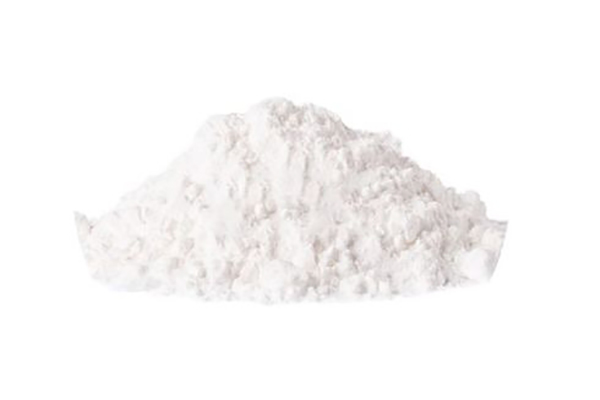
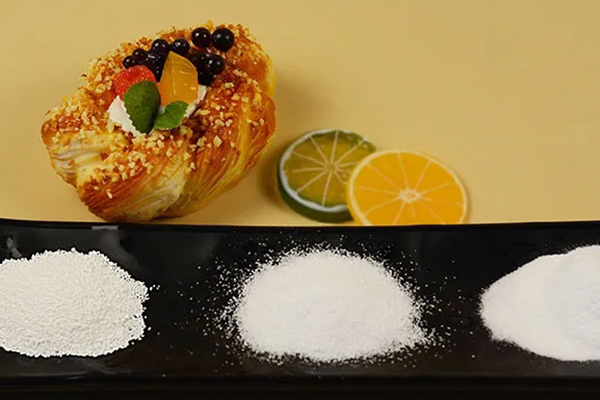
In the food industry, kalsyòm propionate è known as E282. It usually comes as a white crystalline powder or granules. It dissolves easily in water and has a very faint smell. For manifaktirè manje, it is a vital tool. It acts as an effective produi konsèv and a source of kalsiòm. However, its primary role isn’t nutrition; it is protection. It ensures that the food you produce stays safe and appetizing for the consumer for as long as possible.
Why Do Manufacturers Use Calcium Propionate in Food?
The main reason for the use of calcium propionate is to fight against spoilage. Nothing kills a food business faster than moldy products reaching the customer. Calcium propionate acts as a preservative by inhibiting the growth de mwazi and other microorganisms. Specifically, it is excellent at preventing the "rope" effect in bread, which is caused by a specific type of bakteri.
Lè ou use of calcium propionate, you effectively extend a Lavi etajè de machandiz kwit nan fou. This allows bread and other baked goods to be transported over long distances and sit on grocery store shelves without going bad in a few days. For a business owner like Mark, this means less waste and higher profits. Calcium propionate helps keep the texture and taste of the product consistent. Unlike some strong preservatives, it does not interfere with the chemical action of yeast, meaning it doesn’t stop the dough from rising. This makes it a favorite in the bakery world.
Is Calcium Propionate Safe to Eat for Everyone?
One of the most common questions I get asked is, "Is kalsyòm propionate safe to eat?" The short answer is yes. It is jeneralman rekonèt kòm san danje (Gra) pa la Administrasyon Manje ak Medikaman (FDA) in the United States. This means that experts have reviewed the scientific data and determined that it does not pose a risk to health when used in standard amounts.
Globally, organizations like the Òganizasyon mondyal pou lasante (WHO) and the Food and Agriculture Organization (FAO) also recognize it as safe. The body processes kalsyòm propionate very easily. When you eat it, your digestive system breaks it down into kalsiòm ak asid propionic. A kalsiòm is used for bones and other functions, while the asid propionic è metabolized like any other fatty acid. There is no evidence of toxicity or that it builds up in the body. So, for the vast majority of people, calcium propionate is a food ingredient that is perfectly safe.
Is Calcium Propionate Vegan and Plant-Based Friendly?
With the rising popularity of plant-based diets, many consumers are checking labels more strictly. They want to know if kalsyòm propionate è vegan. I have good news: Kalsyòm propionate is indeed vegan. Although it contains kalsiòm, which we often associate with dairy, the kalsiòm used to make this sipleman usually comes from mineral sources like limestone, not from milk or animals.
Because it is chemically synthesized for commercial use, no animal products are involved in the manufacturing process. This makes it an ideal produi konsèv pou vegan breads, tortillas, and other plant-based machandiz kwit nan fou. If you are manufacturing products for a health-conscious or ethical market, you can confidently use kalsyòm propionate without alienating your vegan customers. It fits perfectly into a modern, ethical diet.
How Does Calcium Propionate Prevent Spoilage?
To understand how kalsyòm propionate works, we have to look at the microscopic level. Mold ak bakteri need energy to grow and multiply. Calcium propionate causes a disruption in the energy metabolism of the mikwo -òganis cell. Essentially, it prevents the microbe from processing the energy it needs to survive.
By preventing mold and bacterial growth, calcium propionate extends the time a product remains fresh. It is particularly effective against mold growth, which is the most common enemy of bakery products. However, it is important to note that while it inhibits growth, it doesn’t kill existing microbes like a high-heat sterilization process would. That is why it is used in conjunction with good hygiene and proper packaging. Calcium propionate is used as a defensive barrier, keeping the "bad guys" at bay so your customers can enjoy fresh food.
Where Is Calcium Propionate Commonly Used?
You will find that calcium propionate is a preservative used in a wide variety of pwodwi manje. It is most souvan itilize nan la baking industry. If you check the label of your sliced bread, buns, rolls, pizza crusts, or tortillas, you will likely see it listed. It helps these items stay soft and mold-free.
Beyond la bakery, it is also found in some pwodwi letye. It can be used in fromaj, yogurtak whey products to prevent spoilage. It is also found in various manje trete ak Manje pake. Because it doesn’t have a strong flavor, it blends well into anpil manje without altering the taste. It is effectively used as a food protector in almost every aisle of the grocery store.
Calcium Propionate vs. Other Preservatives: What is the Difference?
Why choose kalsyòm propionate over other preservatives? It often comes down to the specific needs of the food. For example, Sodyòm propionate is another common produi konsèv. Sepandan, Sodyòm propionate can raise the sodyòm levels in food, which some manufacturers want to avoid. Kalsyòm propionate adds calcium instead, which is often seen as a benefit.
Another competitor is sorbate potasyòm. While effective, sorbate potasyòm is generally better for foods with a higher pH or liquid products. Kalsyòm propionate is the king of yeast-leavened products because, as mentioned earlier, it has a minimal effect on yeast. Potassium propionate is another variant, but kalsyòm propionate remains the standard for bread. In the European numbering system, you might see these listed as E 280 (propionic acid), E 281 (sodium propionate), E 282 (calcium propionate), and E 283 (potassium propionate).
Are There Any Side Effects to Be Aware Of?
Pandan kalsyòm propionate is safe for most, some individuals might be sensitive to calcium propionate. In rare cases, consumption has been linked to side effects like maltèt ou digestive issues. There have been some anecdotal reports linking it to behavioral changes in children, such as irritability or restlessness, but scientific evidence confirming this is limited.
For the vast majority of the population, consuming kalsyòm propionate in the amounts found in food is harmless. However, sekirite manje requires transparency. That is why it is always listed on the ingredient label. If a consumer knows they get a maltèt from certain additives, they can check the label. But for a business owner like Mark, the risk of selling moldy bread is far greater than the risk of rare sensitivity. Calcium propionate helps ensure the safety and quality of the food supply chain.
Regulatory Status: What Do the FDA and EFSA Say?
We touched on this earlier, but let’s get specific. The Administrasyon Manje ak Medikaman (FDA) lists kalsyòm propionate tankou Gra (Generally Recognized As Safe). There are limits on how much can be used, typically depending on the food category, but it is widely accepted.
In Europe, the Efsa (European Food Safety Authority) has also evaluated it. In their opinion on the re-evaluation de asid propionic and its salts, they confirmed that there were no significant safety concerns for the general population. The re-evaluation of propionic acid (E 280) and its salts (E 281, E 282, E 283) reinforced their status as safe food additives. This global regulatory approval makes kalsyòm propionate a reliable choice for international trade. Whether you are selling in the US or Europe, you are covered.
Storing and Handling Calcium Propionate
If you are a manufacturer, you need to know how to store calcium propionate. It should be kept in a cool, dry place. Because it absorbs water easily (it is hygroscopic), bags should be kept tightly sealed. If it gets damp, it can clump, making it hard to mix into your dough.
When handling it, standard safety gear like gloves and masks should be worn to avoid inhaling the dust, which can be irritating. However, once it is mixed into the dough and baked, it is perfectly safe. Proper handling ensures that the sipleman remains effective for anpeche mwazi ak growth of mold in your final product.
Summary of Key Points
Here is a quick summary of what we have covered about kalsyòm propionate:
- Definisyon: It is the calcium salt of propionic acid, yon aditif manje used to keep food fresh.
- Sekirite: Li se rekonèt kòm san danje (Gra) by the FDA and Efsa. Li se safe to eat.
- Vegan: Li se yon vegan sipleman, making it suitable for plant-based diets.
- Function: It works by inhibiting the growth de mwazi ak bakteri, effectively preventing spoilage.
- Itilizasyon: Li se souvan itilize nan machandiz kwit nan fou, fromajak Manje pake.
- Benefis: It does not interfere with yeast, making it perfect for the baking industry.
- Health: While some may be sensitive to calcium propionate (causing a maltèt), it is non-toxic and readily absorbed by the body.
I hope this guide helps you understand why calcium propionate helps preserve our food supply. If you need any assistance with packaging to further extend a desired shelf life of your products, feel free to contact us!
Post time: Dec-18-2025