

Ammonium acetate, a chemical konposatu -rekin Ka zenbaki 631-61-8, stands as a cornerstone in various industrial and laboratory applications. From its critical role as a buffer -an HPLC to its function as an Azidotasun erregulatzailea in food, this ammonium salt is incredibly versatile. In this article, we will explore the depths of this hygroscopic solid, examining its sintesia, chemical properties, and the wide array of uses that make it indispensable. Whether you are a chemist, a procurement officer, or simply curious about inorganic chemistry, understanding the use of ammonium acetate is worth your time. We will dive deep into how this reagent facilitates mass spectrometry, aids in DNA extraction, and serves as a vital component in organic synthesis.
What Exactly is Ammonium Acetate (CAS 631-61-8)?
Ammonium acetate a konposatu kimikoa with the formula NH₄CH₃CO₂. Ideally, it represents the salt of a weak acid (acetic acid) and a weak base (amoniako). This unique combination gives it distinct characteristics that are highly valued in chemistry. Unlike strong salts like sulfate or chloride based compounds, ammonium acetate occupies a neutral ground, often used when a non-disruptive, gentle ionic environment is required. The CAS 631-61-8 identifier specifically refers to this acetate salt in its pure form.
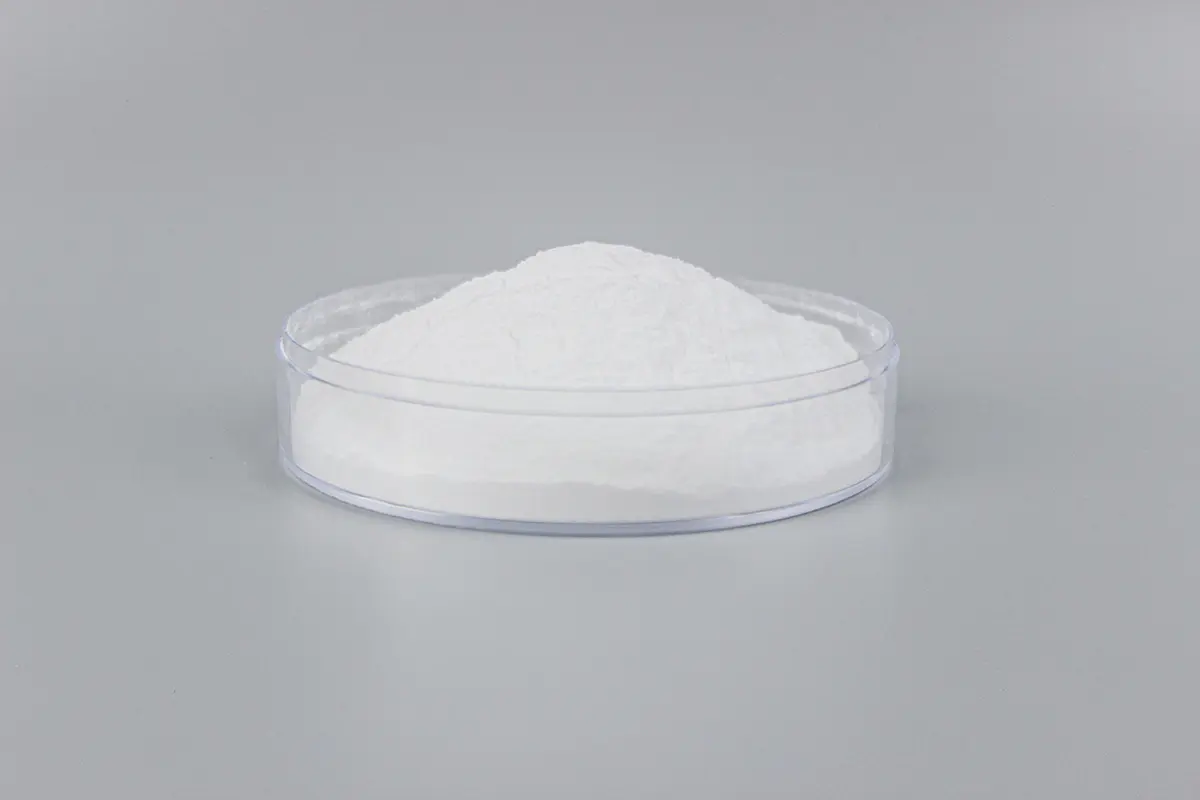
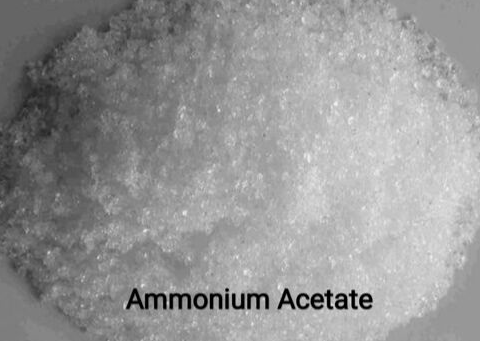
Physically, ammonium acetate is a white, crystalline solid. It is known to be a hygroscopic solid, meaning it readily absorbs moisture from the air. If you leave a jar of ammonium acetate open, you might find it clumping together or turning into a slushy mess over time. Because of this, proper storage in a dry environment is essential. It is highly kontroladio in water, creating an ammonium acetate solution that is fundamental to many liquid-based processes in the lab.
In the world of commerce and industry, ammonium acetate is frequently traded and utilized as a high-purity reagent. Because it is composed of acetate and ammonium ions, it decomposes relatively easily upon heating, which is a property that sets it apart from stable salts like Sodio azetatoa. This thermal instability is actually a benefit in specific analytical techniques, preventing the buildup of residues in sensitive equipment.
How is the Synthesis of Ammonium Acetate Achieved?
-A sintesia -ren ammonium acetate is a classic acid-base reaction. It is primarily produced by the neutralization -ren acetic acid -rekin amoniako. This process can be done using varying concentrations, but the most common industrial method involves saturating glacial acetic acid -rekin amoniako. Glacial acetic acid is the water-free, concentrated form of acetic acid. Noiz amoniako gas is bubbled through it, the reaction of ammonia eta acetic acid yields the solid ammonium acetate.
Another method for ammonium acetate preparation erreakzioa dakar acetic acid with ammonium carbonate. In this scenario, acetic acid reacts with the carbonate, releasing carbon dioxide and water while forming the azetatu. This method is often used when handling gaseous amoniako is not feasible or when a solid ammonium source is preferred. The chemical equation generally looks like this: $2 CH_3COOH + (NH_4)_2CO_3 \rightarrow 2 NH_4CH_3COO + H_2O + CO_2$.
It is also possible to synthesize it by mixing glacial acetic acid with ammonia in an Irtenbide akua, though getting the solid crystal out requires evaporating the water, which can be tricky due to the compound’s tendency to lose amoniako upon heating. Therefore, careful control of temperature and pH is required during sintesia to ensure the final product is pure ammonium acetate. Hau reaction of ammonia and acetic components is fundamental to producing the azetatu needed for global markets.
What Are the Key Chemical Properties of This Compound?
Understanding the chemical properties -ren ammonium acetate is crucial for its effective application. As mentioned, it is derived from a weak acid and a weak base. This makes it an excellent candidate for creating a buffer solution. An acetate buffer made with ammonium acetate works effectively in the acidic range, helping to stabilize the pH of a reaction mixture. Because both the cation (ammonium) and anion (azetatu) can hydrolyze, the pH of a pure ammonium acetate solution is roughly neutral, typically around pH 7.0, though this can shift depending on concentration.
One of the most defining chemical properties is that it is volatile at low pressures. This is distinct from Sodio azetatoa ala Potasio azetatoa, which leave solid residues when solvents evaporate. When ammonium acetate is heated or placed under vacuum, it dissociates back into ammonia and acetic acid (edo acetic acid with ammonia vapor), leaving virtually no trace behind. This property is the "magic trick" that makes it so popular in analytical chemistry.
Regarding disolbagarritasun, ammonium acetate is incredibly versatile. It will urtu readily in water, methanol, and ethanol. This high disolbagarritasun allows it to be used in various mobile phases for chromatography. However, it is less stable than Amonio sulfatoa; if exposed to heat for too long, it loses ammonia and becomes acidic.
Why is Ammonium Acetate Critical in HPLC and Mass Spectrometry?
In the field of analytical chemistry, particularly High-Performance Liquid Chromatography (HPLCeta HPLC coupled with Mass Spectrometry (LC-MS), ammonium acetate is a superstar. It is widely used to create a buffer -entzat mobile phases. -A buffer for mobile phases helps maintain the pH of the solvent as it moves through the column, ensuring that the compounds being analyzed (analytes) remain in a consistent ionization state. This leads to sharper peaks and more accurate data.
The real reason ammonium acetate shines in LC-MS is its volatility. When preparing samples for mass spectrometry, scientists must avoid non-volatile salts in preparing samples. Traditional phosphate buffers, while effective, are solid salts that will clog the delicate intake source of a mass spectrometer. Ammonium acetate, being volatile at low pressures, sublimates and disappears. It provides the necessary ionic strength and buffering capacity in the liquid phase but vanishes in the gas phase of the detector.
Salts that have been used in the past, like phosphates or sulfates, are now largely replaced by ammonium acetate ala Amonioa eratzea in these applications. It is also compatible with phases for HPLC with ELSD (Evaporative Light Scattering Detector), another technique that requires volatile buffers. The azetatu ion facilitates the ionization of various molecules, making it the standard reagent for the analysis of various compounds ranging from drugs to proteins.
How Do You Perform Ammonium Acetate Preparation in the Lab?
While many buy it premixed, knowing how to create a buffer solution is a standard lab skill. Ammonium acetate preparation in the lab usually involves dissolving the crystalline solid in high-purity water. For example, if you need to make 10m ammonium acetate stock solution (which is very concentrated), you would weigh out a significant amount of the hygroscopic solid eta urtu it carefully.
However, because it is hygroscopic, weighing it can be inaccurate if it has absorbed water. Sometimes, chemists prefer to make the buffer in situ by mixing acetic acid eta amoniako (edo ammonium hydroxide) solutions until the desired pH is reached. If you calculated the amount required for a specific molarity, always account for the water weight if the solid has clumped.
Let’s say you need a specific volume. You might calculate the amount required for 70 ml or the amount required for 70 ml solution of a specific molarity. You would dissolve the ammonium acetate in slightly less water, adjust the pH using acetic acid ala amoniako, and then top up to the final volume. This ensures your acetate buffer is precise. This solution is then often filtered to remove any particulates before being used as a reagent in sensitive instruments.
Is Ammonium Acetate Used as a Food Additive?
Yes, surprisingly to some, ammonium acetate da janari gehigarri gisa erabiltzen da. In the food industry, it serves primarily as an Azidotasun erregulatzailea. It is listed under the E number E264 in Europe (though approval status varies by region, so always check local regulations). Its role as an additive as an acidity regulator helps to control the pH of processed foods, preventing them from becoming too acidic or too alkaline, which can affect flavor and preservation.
While not as ubiquitous as azido zitrikoa ala Sodio azetatoa, ammonium acetate is used Berarian janari applications where a buffering agent is required that doesn’t add a salty taste (like sodium chloride would). It is generally considered safe in the quantities used as a food ingredient. The azetatu component is naturally metabolized by the body, and the ammonium is processed by the liver.
-A use of ammonium acetate in food demonstrates the compound’s safety profile when handled correctly. It acts similarly to how ozpin (acetic acid) works, but with a more neutral pH profile due to the ammonium counter-ion. Whether janari gehigarri gisa erabiltzen da or in industrial synthesis, the fundamental chemistry of the azetatu group remains the consistent active factor.
What Role Does It Play in Organic Synthesis Reactions?
Ammonium acetate is a favorite reagent for organic chemists. It is widely used as a source of ammonia in reactions because it is easier to handle than gaseous ammonia. One of its most famous applications is as a catalyst in the Knoevenagel condensation. In the Knoevenagel reaction, ammonium acetate helps facilitate the bonding of an aldehyde or ketone with an active hydrogen compound. The azetatu acts as a mild base to deprotonate the active hydrogen, while the ammonium can activate the carbonyl group.
Another major application is in the Borch reaction. The Borch reaction is a reductive amination process. Here, ammonium acetate serves as the source of ammonia to convert a ketone or aldehyde into an amine. The ammonia in the Borch reaction reacts with the carbonyl to form an imine, which is then reduced to an amine. This is a standard method for synthesizing pharmaceutical intermediates.
Gainera, ammonium acetate is used in the synthesis of imidazoles, oxazoles, and other heterocyclic compounds. It provides both the nitrogen (from ammonium) and the buffering capacity (from azetatu) needed for these complex ring-forming reactions. In many cases, ammonium acetate in pure form is preferred over ammonium chloride ala sulfate because the azetatu byproduct is less interfering or easier to remove.
How is It Used in Soil Analysis and Agriculture?
In the agricultural sector, ammonium acetate plays a vital role in analyzing soil fertility. Specifically, it is used for the determination of available potassium (K) in soil. The method involves using a neutral ammonium acetate solution to extract potassium ions from soil samples. The ammonium ion acts as a replacement cation for potassium on the soil’s clay particles.
Because the ammonium ion (NH₄⁺) and the potassium ion (K⁺) have similar sizes and charges, the ammonium can physically displace the potassium bound to the soil. Once the potassium is released into the solution, scientists can measure it to determine how much fertilizer a farmer needs. This process relies on the soil wherein the ammonium ion acts as a replacement agente.
This extraction method is a standard in soil science. It helps in determining the "cation exchange capacity" (CEC) of the soil. While other extractants exist, ammonium acetate is preferred because it simulates the natural release of nutrients fairly well and buffers the soil extract to a neutral pH (usually pH 7.0). This prevents the acidic dissolution of minerals that wouldn’t naturally be available to plants.
What About Molecular Biology and DNA Extraction?
In the realm of molecular biology, ammonium acetate is a trusted tool for DNA and RNA purification. After scientists break open cells to access genetic material, they often use ammonium acetate to precipitate proteins and remove contaminants. It is particularly useful because it inhibits the coprecipitation of dNTPs (the building blocks of DNA) and some oligosaccharides.
When used for DNA extraction, a high concentration of ammonium acetate is added to the sample. This helps to "salt out" proteins, making them insoluble so they can be spun down in a centrifuge. The DNA remains in the liquid. Later, ethanol is added to the liquid to precipitate the DNA. Ammonium acetate is often preferred over Sodio azetatoa in this step when the DNA is going to be used for enzymatic reactions (like digestion by restriction enzymes) because the ammonium ion is less likely to inhibit these enzymes than sodium or potassium ions.
It is also used to replace cell buffers in certain protocols. The mild nature of the azetatu eta ammonium ions makes it gentle on the delicate strands of DNA and RNA. This application underscores the versatility of ammonium acetate: from tons of industrial reagent to microliters in a genetic research tube, its utility is vast.
How Does It Compare to Other Salts Like Ammonium Formate?
A aukeratzerakoan buffer ala reagent, chemists often choose between ammonium acetate eta Amonioa eratzea. Both are volatile salts used in LC-MS, but they have differences. Ammonium formate is the salt of Azido formikoa, which is a stronger acid than acetic acid. Consequently, ammonium formate buffers are better for a lower pH range (around pH 3-4), whereas ammonium acetate is better for a slightly higher range (pH 4-6).
If you need a buffer solution that is slightly more acidic, you might lean towards Azido formikoa and its salt. However, acetic acid eta ammonium acetate are often cheaper and sufficiently effective for general broad-spectrum analyses.
Aldean Sodio azetatoa, ammonium acetate has the advantage of volatility. If you are running a process where you need to get rid of the salt afterwards, ammonium acetate is the winner. If you need a stable salt that stays put, Sodio azetatoa is better. In terms of disolbagarritasun, both are highly soluble, but the ammonium salt is generally more hygroscopic.
Another comparison is with Amonio sulfatoa. Sufritu is a non-volatile, strong salt. It is great for protein precipitation (salting out) but terrible for Mass Spectrometry because it clogs the machine. Therefore, salts that have been used historically like sulfate are being replaced by azetatu in modern analytical labs.
Post time: Nov-20-2025